Vote and Rate Jamie Clubb's articles and reviews

Wednesday, 13 July 2011

Top Ten Best Movie Villains

Christian Bale as Patrick Bateman in the film ...Image via Wikipedia
This article was written out of total unashamed (or perhaps even shameless) self-indulgence. It is shamelessly low brow geeky and will probably never find its way into any self-respecting publication. However, when I first started writing paid online reviews this topic cropped up and I just couldn’t resist the urge to put my thoughts down. Villains are fascinating characters in fiction whether it is on the big screen, as the ones below are, or in literature. Without them we don’t get the contrast with the heroes. However, there is something much than that. The villain often speaks the words we dare not speak or presents us the line we dare not tread…

Friday, 8 July 2011

The line between candour and sensationalism: a review of "Tiger, Tiger: A Memoir"

I have mixed feelings about the proliferation of tragic biographies. This newish sub-genre is a bit like the reverse of a true crime biography. Like Steve Salerno’s definition of self-help styles, empowerment and victimization, the true crime biography caters to a perverse idea about empowerment whilst the tragic

Friday, 3 June 2011

Critical Thinking for Health and Medicine

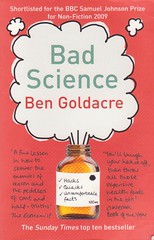
31 July 2010 015Image by EadaoinFlynn via Flickr"Bad Science" is a modern classic of scientific sceptical movement. Its importance and influence easily rank it alongside the defining works of Carl Sagan, Martin Gardener, James Randi, Michael Shermer, David Aaronvitch, Christopher Hitchens, Richard Dawkins, Carol Tavris, Paul Kurtz, Sam Harris and Phil Plait. My rather unscientific mind put it on my "to read" list for way too long. As I learnt more about the scientific method and critical thinking from subjects I was more comfortable with like history or the social sciences, I slowly made my way to Goldacre's book with trepidation.

As it turns out, and according to Goldacre, this is the problem. The general public are confused by science and therefore untrusting of it, which makes them more susceptible to pseudoscience, quackery and manipulation on a grand scale. Whether it is buying ineffective "natural" cures from nutritionist quacks to over-priced and under-tested drugs from devious pharmaceutical companies, Ben Goldacre fears that an ignorant public is being duped and the consequences can be catastrophic.

Tuesday, 31 May 2011

Unearthing another eagle


Plot:

The audio play tells a tale of a noble and very brave centurion, Marcus Aquila (Tom Smith) who is almost crippled when he attacks an enemy chariot in battle. As he recovers he saves the life of a gladiator, Esca (Tony Kearney), and buys him as his slave. Having formed a bond with the man he then releases him from slavery, but asks him if he would like to accompany him on a perilous journey. Impressed by his former master’s kindness and a desire to see the homeland he was originally taken from, Esca agrees to accompany Marcus.

Wednesday, 18 May 2011

The Invisible Man - review of a classic novel

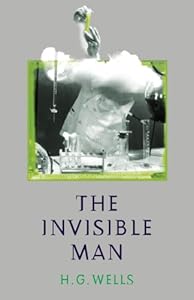
Cover of "The Invisible Man"Cover of The Invisible ManA strange series of events commence in the village of Iping, West Sussex, when a mysterious stranger arrives and lodges at a local inn. The man's face is swathed in bandages and he wears huge goggles and a wide brimmed hat along with a thick cloak and gloves. He is reclusive and hides himself away in his rented room. Soon after his appearance a series of mysterious burglaries take place. Curious about the stranger the innkeepers look into his room only to see his clothes strewn across the room and the man nowhere to be seen. Suddenly his furniture seems to come to life and flies at them. Before long the people of Iping discover they have been visited by the incredible and insane Griffin, the invisible man, an individual who has terrible plans for the entire human race...

My first proper encounter with a proper "Invisible Man" story came in the form of the BBC's 1984 television series. I cannot say I relate it to the happiest of memories. I was aired on Sunday night during our colder months and only served as a mild diversion that the first day of school started tomorrow. However, it was the most faithful adaption of the book and I kept tuning in every week. Many years later and having seen several adapted and too many inspired works, I finally got round to reading the original novella.

Sunday, 1 May 2011

50 Great Myths of Popular Psychology - a book review


Psychology, being a soft science, gets a lot rough press. We live in a time where the self-help industry and the modern day followers of Sigmund Freud’s psychoanalysis have brought the study of how we think into disrepute. Thanks to the Oprah Winfrey Show, any quack seems to be able to give us advice on how our mind operates whilst everyone seems to have their own take on psychology, based on what they’ve seen, heard or experienced. However, psychology and its myriad of different disciplines is a science that deserves respect. There is a massive body of evidence taken from robust and decades long studies based on the hard neuroscience available and in accordance with the scientific model. Behavioural science has helped improve the way we teach and understand one another, and improve all sorts of rehabilitation. There is a thick and definite line that separates peer-reviewed and tested academic psychology and psychiatry from psychomythology. This book’s single purpose is to explain this to psychology students and the general public.

Wednesday, 20 April 2011

Seven days of change and consequences - a book review of "The Godless Boys" by Naomi Wood

Set in an alternative history where England is ruled by the Church and the secularist community has been banished to a solitary island, Naomi Wood’s debut novel,“The Godless Boys”, is a story about a dramatic week on the island. Nathaniel, the son of an original member of the secular movement, leads a gang of teenage boys, the Malades, who are determined to protect the island from any religious influence. This means intimidating potential “gots” and prowling the streets at night. Eliza Michalka lives a sorry existence on the island - a part-time prostitute and a part-time undertaker who drops corpses into the surrounding ocean - she pines after her lost love, the aloof fishmonger Arthur Stansky. However, this week all their lives will be changed when Sarah, daughter of 1976 church-burner, Laura Wicks, stows away to seek out her mother on The Island…
We are living in a time that has seen the rise of fundamental religiosity and New Atheism. Therefore it isn’t difficult to see where the author’s inspiration came from. Why she decided to set it in 1986 is another matter altogether. There is little in the way of obvious parallels with the real 1986, but I guess it helps to keep matters simple without the presence of the internet and the normalcy of mobile phones. The whole book is markedly minimalistic without being pretentious. This is perhaps reflective of the two radically opposing philosophies that form the backdrop of the story.

Wood does not explore the details of either the Christian dogma that now rules England or the strict secularist movement of The Island. Two vital dates are given for when secularists, usually involved in anti-religious activity such as church burning, were deported – 1951 and 1976 – and we are given an overview of the violent struggles between the state and rebels, but otherwise the history of the whole conflict is kept down to a minimum. Likewise aside from Christian imagery and the hatred certain characters, such as Nathaniel’s Malades, have towards religion, there are little intricate details regarding what each side actually believes. Despite one newspaper critic describing The Malades as Richard Dawkins in bovver boots, there is nothing whatsoever mentioned regarding a scientific argument against the Christians. The Secular Movement’s problems with the church are never lain out or described. Therefore, this could be a story about any society divided into polarized factions.
This leaves the story to be entirely character-driven and concerned with the relationships its players experience over seven days. One man, an ardent first generation secularist, will re-evaluate his relationship with God. Nathaniel will be made to reconsider his devotion to The Malades. Arthur and Eliza will have to look at the personal defensive walls they have created. However, the driving force for change in all of this – the story’s catalyst – is Sarah. She enters having already received a revelation after 10 years not knowing her mother had been arrested for being involving a Secular Movement terrorist attack. Although the story follows her fact-seeking mission, she seems to be the only character that isn’t experiencing personal changes in her attitude, having already gone through a dramatic personal crisis.

Despite some of its adult content, “The Godless Boys” reminds me of the typical sort of material read for GCSE English. This is not a slight on its simplicity, but I think there might be a lot teenagers can relate to in the text. “The Godless Boys” is also a story about consequences and the way different individuals react to dramatic changes. Nathaniel is a part of his tragic father’s legacy, but little does he realize he is leaving a legacy of his own in The Malades. His personal philosophy and beliefs have their own consequences. Wood succeeds in getting this across, providing certain moral twists reminiscent of David McKenna’s “American History X” that provokes a lot of thought.

Don't forget to check out Jamie Clubb's main blog www.jamieclubb.blogspot.com
Enhanced by Zemanta