Vote and Rate Jamie Clubb's articles and reviews

Monday, 16 February 2015

You Could Say the Same About Me


“You could say the same about me… And you probably do”. That cutting end to a sentence uttered by the Sir Thomas Cromwell of the BBC2 adaptation of Hilary Mantel’s “Wolf Hall” was delivered with such poise and timing by Mark Rylance that it felt like I had listened to an ancient proverb. The scene, which saw Cromwell standing away from the Royal Court and being treated like the town gossip by Jane Boleyn, encapsulates the nature of all politics. It is a good lesson: the person whose nature it is to collude with you demonstrates that the traits of a person who is likely to conspire against you.   

Wednesday, 4 February 2015

The Blooded Lens Filter Part 2


The Blooded Lens Filter
Distorting Horror Fiction through Cinema (Part 2)

Back to a bit of self-indulgence and my list of fictional horror icons and archetypes that have been changed so much by celluloid that the popular perception of them little resembles their pre-film state.  As always, spoilers ahead for the respective works being referenced. If you haven't read/seen "Psycho" and are unaware of the famous twist I urge that you do before reading my piece on Norman Bates.

Thursday, 22 January 2015

Review of Episode 1 "Wolf Hall"


Last night saw the first episode of “Wolf Hall”. This historical drama made authenticity part of its marketing and a lot of historians were involved in the process to bring Hilary Mantel’s two novels, “Wolf Hall” and “Bringing up the Bodies” to the small screen. When it comes to period fiction, the Tudors have received the lions share, especially during the reigns of Henry VIII and Elizabeth I. However, Hilary Mantel’s work definitely qualifies as an original take on the era in many respects. She chooses to view her tale through the eyes of an individual who is nearly always depicted as a Machiavellian villain: Sir Thomas Cromwell. However, don’t expect a sneering Francis Urquhart type politician who wins his audience over by revelling in his cunning and cleverness. Mantel’s  Cromwell is a truly sympathetic character. By taking this highly unconventional tactic, we are provided with a genuinely different perspective on the Tudor court, its various characters and the politics of Henry VIII. The term “game-changer” has become a buzzword in the promotion of this current golden age of drama, often attributed to US series like “True Detectives”, however, with this interpretation of Tudor life I believe it could be applied with confidence.

Friday, 9 January 2015

Charlie Hebdo Attacks: Perspective and Portrayal

I plead a strong degree ignorance in writing this piece. My knowledge of French satire or even French journalism is paltry, to say the least. My knowledge of French cartoons is probably largely made up of "Asterix" books and my French satire is all out of date. So, I can only write in my vague and unofficial capactity as a supporter of freedom of speech, an observer or irrational thinking, a lover of humanity, a fan of satire and especially cartoons, a humanist, a secularist and an enemy of injustice. Nevertheless, all of these roles demand that I say something. The events of 7th January 2015 that saw 12 individuals (the editor of the newspaper, eight other employees, including two cartoonists, and two police officers) shot dead plus an additional 11 wounded at the offices of the satirical newspaper, Charlie Hebdo, in Paris, by Islamic extremists in response to the newspaper's regular publication of cartoons depicting the Prophet Muhammad prompted me to think about a lot things.

Tuesday, 6 January 2015

Joan of Arc for young adults

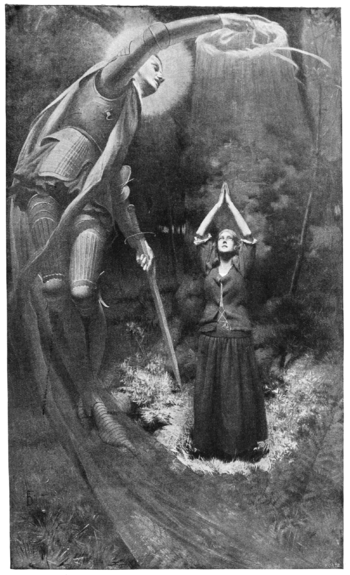
Scan of plate in book on Joan of Arc, describe...
Scan of plate in book on Joan of Arc, described as "Joan's Vision" (Photo credit: Wikipedia)
Icons are not as easy to fathom as we might like. Too many of them have become enshrined in a country's sense of identity and then crossed over as s pure symbol for a philosophy or political ideal. Finally, they make their way into a universal representation of something that dares defiance. Joan of Arc is a prime example. I struggle to find something that properly grounds the person and separates the myth. The below book wasn't the answer.

I came to this book purely by chance. It wasn’t reviewed or recommended to me. I have a rather omnivorous taste in most things and history is no exception. However, if there is an area that attracts my attention more than most it is the dissection and deconstruction of historical icons. I love myths and legends, and part of the process of appreciating a fictionalized story is distilling the actual facts. It seems like a bizarre motivation and against the normal persuasions of a romanticist, but I have never claimed to be a straightforward personality. When one considers that I have a keen interest in endorsing critical thinking, it all makes a bit more sense. Nevertheless, “Beyond the Myth: The Story of Joan of Arc” has never made any sceptical reading list I have seen. I chose it because I wanted to read a compact and comprehensive description of Joan’s life and the title perked the interests I have already mentioned.

Monday, 5 January 2015

Sweeney Todd as we don't know him


The penny dreadful, “Sweeney Todd”, original name “The String of Pearls: A Romance”, is one of those stories that everything thinks they know and very often mistaken. My edition of the complete collected parts was sold off the back of Tim Burton’s feature film adaptation of the musical, “Sweeney Todd: The Demon Barber of Fleet Street” and bears a cover design taken directly from the promotional pictures of the 2007 film. If readers were expecting a blood-soaked story, starring a vengeful anti-hero then they will be somewhat disappointed. The original story never once describes a throat being cut, although it is implied and threatened a lot. Even Todd’s murderous mechanical chair is only twice described in action. This is a text that is representative of its time and I urge interested readers to view it within that context. 

Tuesday, 23 December 2014

The Perfect Actress!

As is the fashion of most great British actors, Billie Whitelaw played down her career and her art. She called it a "flibbertigibbety occupation" and, again like so many performers, she lacked confidence throughout her life. She had a stutter as a child and suffered from stage fright. This didn't stop her from becoming one the best possible examples of her profession I have ever seen. She ticks all the boxes one could possibly imagine when it came to the pure art and craft (I consider it transcend both) of acting.